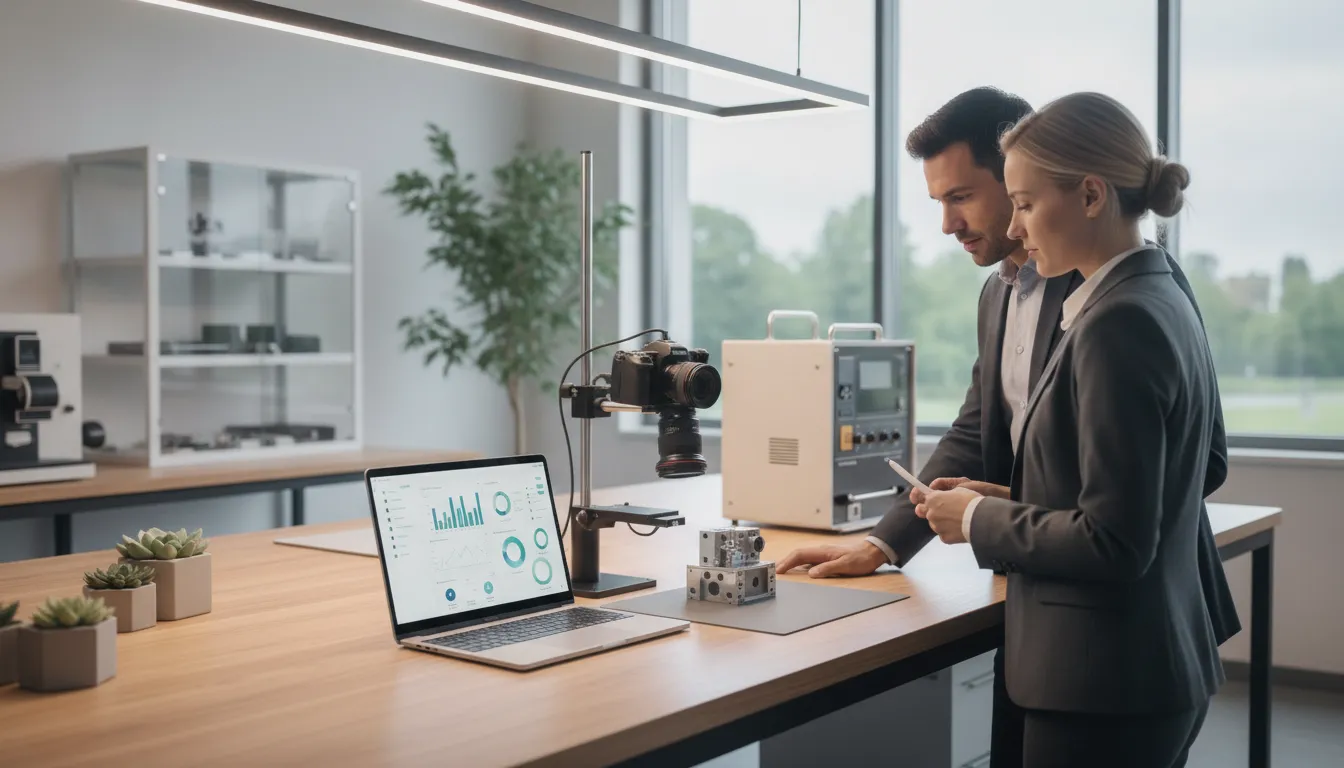
AI quality inspection uses cameras and a trained model to flag defects on a product, part, or package while it is still on the line. It is worth a pilot when one defect class is costly, the station is stable, and someone owns the exceptions. It is a poor first project when the defect is vague, the line changes every week, or nobody will review the misses.
Call (646) 494-2286 to book a 45-minute strategy call
Most vendor pages lead with near-zero defects. A mid-market operations leader needs a different answer. Which station should go first, what has to be true before a camera is useful, and which numbers decide whether the pilot continues. This guide covers that decision. It does not cover CRM rollout. If the system you need to fix is HubSpot or Salesforce, start with a CRM implementation plan instead.
Where manual inspection actually breaks
Manual inspection fails in a few repeatable ways. Fatigue changes what a person sees after an hour. A fast line outruns a visual check. A rare defect shows up so seldom that a new inspector has never seen a good example. And the record of what was rejected often lives in a clipboard, so the next shift cannot learn from it.
Published plant examples show the gap in plain numbers. ASSEMBLY magazine reported that human defect detection often varies between 60 and 90 percent. One car-seat line in that report cut inspection from about one minute per seat to 2.2 seconds after adding an AI camera system. The same project reported a 30 percent drop in defect rates. Those figures belong to that plant and that vendor. They are a reason to measure your own station, not a promise that your line will match them.
Labor cost is the other pressure. The same report put average U.S. quality-control inspector pay above $89,000 a year, and that cost rises as you add shifts. Replacing those people is usually the wrong goal. The useful goal is to stop paying for misses, rework, and returns that a stable camera check can catch every cycle.
Before you buy anything, write down the station in operating terms:
- The part, package, or assembly you would inspect.
- The defect that costs real money when it escapes.
- How many units pass the station per hour.
- Who decides accept or reject today, and where that decision is written down.
If you cannot fill those four lines, you do not have an inspection project yet. You have a quality problem that still needs a definition.
What an AI quality inspection system actually does
An AI quality inspection system is a camera, controlled light, a model, and a rule for what happens next. The model looks at an image and scores it against defect classes you defined. A person, or a line controller, then accepts, rejects, or sends the unit to review.
ASSEMBLY describes a six-step flow that matches how serious pilots are built:
- The unit arrives at a fixed inspection point and is positioned the same way each time.
- Cameras capture the surfaces that matter, with light set for that defect.
- The system prepares the image, including color or gray-scale choices.
- A model trained on good and bad examples scores the image.
- An operator or a rule accepts, rejects, or escalates the result.
- The result is logged so quality and production can see patterns.
Two design choices matter more than the model brand. First, the camera has to see the defect. A scratch on a glossy housing and a missing clip inside a recess need different light and angles. Second, someone has to label enough bad examples. Rare defects are hard to learn because the plant does not have many photos of them. If you only have three pictures of the defect you care about, the model will not be reliable. Collect more, or pick a defect you can photograph this month.
Keep a person in the decision on day one. The model should propose. A trained inspector should confirm until the false-reject rate is low enough that stopping the line for a good part costs less than letting a bad part through. Full auto-reject is a later step, not the pilot.
Decide if a pilot is worth funding
Score the station before you ask a vendor for a demo. A pilot is a small, dated test on one defect and one station. It is not a plant-wide quality program.
| Signal. | Pilot is reasonable. | Wait or narrow the scope. |
|---|
| Defect definition. | One visible defect, with photos of good and bad units. | Quality in general, or a defect no one can point at. |
| Station stability. | Same fixture, light, and part orientation for weeks. | The line, the part, or the packaging changes every week. |
| Volume. | Enough units that a missed defect shows up in the data. | A handful of units a day, easier to check by hand. |
| Cost of a miss. | Rework, returns, or a customer chargeback you can price. | No one can say what an escaped defect costs. |
| Labels. | A named owner who can mark bad images this month. | Quality and production both assume the vendor will label. |
| Exception path. | A person reviews borderline calls during the pilot. | The plan is unattended reject on week one. |
Fund the pilot when at least four of those six rows land in the left column. If defect definition or labels fail, stop. A camera cannot invent a standard your team has not written down.
Put three numbers in the pilot charter, and no more. Defect escape rate is the share of bad units that pass. False-reject rate is the share of good units the system stops. Minutes per unit is the time from image to logged decision. If a vendor will not report all three, the demo is a slide, not a test.
What to put in the first scope, and what to leave out
The first scope should fit on one page. Name the station, the single defect class, the accept standard, the person who labels images, and the date you will read the three numbers. Add the lighting and fixture as in-scope, because a model trained under demo lights often fails on the real line.
Leave these out of the first purchase:
- Every defect on the line. Add a second class only after the first one holds.
- Unattended auto-reject. Review stays human until false rejects are tolerable.
- A new quality system of record. Log to the system you already use.
- A second plant or a second shift until the first station is stable.
- A promise of a specific savings percent copied from another factory.
Model drift belongs in the scope as a job, not a footnote. When the resin, the paint, or the label art changes, yesterday's "good" photo is no longer the standard. Assign someone to recheck the model when the part spec changes. ASSEMBLY notes that plants have to retrain when materials or specs move, and that image quality limits what the model can call. Budget a few hours a month for that review. Do not treat the install week as the end of the work.
Hardware limits are part of the same page. Higher resolution helps only if the processor can score the frame before the next unit arrives. Ask the vendor what happens at your real line speed, not at a bench demo.
How this differs from a software or CRM project
Leaders sometimes fold inspection into a broader "AI implementation" budget next to the CRM. The work is different, and mixing the scopes produces a plan nobody can accept.
A camera pilot fails or succeeds on images, light, and labels. A CRM project fails or succeeds on process, fields, and whether reps use the system. RubeTech's published HubSpot implementation services case is the second kind of work: a service brand needed lead capture, sales follow-up, and a clean handoff with Salesforce. That is not a visual inspection pilot, and the staffing, timeline, and proof are not interchangeable.
Use the same discipline in both places. Name an owner, limit the first release, and judge it on operating numbers rather than a tour of features. On the plant side those numbers are escapes, false rejects, and time per unit. On the revenue side they are pipeline hygiene, speed-to-lead, and forecast trust. RubeTech's services cover the revenue and systems side, including CRM rescue, when that is the actual bottleneck. Do not hire a CRM team to stand up a camera, and do not hire a vision vendor to fix your pipeline.
If both problems are real, sequence them. Fix the inspection station that is shipping bad product first only when the cost of an escape is already known. Otherwise start with the system your operators work around every day, whether that is the line or the CRM. One accountable pilot beats two half-scoped ones.
Who should own the pilot
Name one operator of the pilot, not a committee. Quality defines the defect and labels the images. Operations owns the fixture, the light, and the line stop rule. Whoever buys the system should not also be the only person who can explain a miss.
A practical split for a mid-market plant looks like this. A quality lead spends a few hours a week marking images and reading escapes. A process engineer owns the station so the camera still sees the part after a changeover. A sponsor at the plant or the operating company reads the three charter numbers at a fixed date and decides continue, narrow, or stop. IT gets involved when images or decisions must land in an existing system. IT should not be asked to invent the quality standard.
Vendors install cameras and train a first model. They do not know which scratch your customer will reject. Keep that judgment inside the company. If the plant cannot spare the quality lead for labeling, delay the pilot. A model built only on vendor-labeled stock photos will look fine in a sales deck and fail on your parts.
RubeTech's work is the adjacent decision. Which operational bottleneck deserves a senior owner? Is the next system to fix a revenue platform rather than a line camera? The published starting prices cover that work, not a camera install. A Discovery Assessment starts at $25,000. CRM Rescue starts at $20,000. Those figures are for the engagements named on that page. They are not a quote for a vision system.
Read the pilot at the end of the agreed window with the sponsor in the room. Continue only if escapes fell and false rejects stayed inside the limit you wrote down. Narrow the defect or the station if the images were the problem. Stop if nobody will keep labeling after the vendor leaves. That stop is a successful pilot. It saved you from a system the plant will not run.
Frequently asked questions
What is AI quality inspection?
It is a camera-based check that scores a product image against defect classes you defined. The system flags likely defects in real time. A person or a line rule then accepts, rejects, or sends the unit to review. It is not a general audit of the plant, and it is not a chatbot on top of your quality manual.
How is it different from a human inspector?
A person can judge a new defect the first time they see it. They also tire, and detection rates vary. A model applies the same rule every cycle, but only for defects it has been shown in enough labeled images. Use the model for the stable, costly check. Keep people on the new and ambiguous cases.
What should a first pilot measure?
Measure defect escapes, false rejects, and time per unit on one station and one defect class. Ignore vanity accuracy if the vendor will not separate "caught a bad part" from "stopped a good part." Read those three numbers on a date you set before the install.
When should we skip it?
Skip it when you cannot point at the defect, cannot photograph bad units, or cannot name who will review exceptions. Also skip it when weekly part changes would force a retrain before the pilot has a result. A cheaper process fix or a clearer accept standard may be the right project instead.
If the bottleneck is the revenue system rather than the line, call (646) 494-2286 or book a 45-minute call. We will tell you whether a discovery assessment or a CRM rescue fits.